APRIL 15, 2026
Hospitality Social Media plays by different rules. Most brands don't know them.

You've followed the playbook. You've posted the reels, tested the hooks, optimised for the algorithm. And yet — the results don't match the effort. It's not because your team isn't good enough. It's because the playbook was never written for you.
Hospitality social media operates under a completely different set of rules to the industries that dominate the conversation at marketing conferences, in online courses, and across the content that fills your LinkedIn feed. The frameworks you're being taught were built for product brands, DTC retailers and SaaS companies. They were not built for hotels, resorts, restaurant groups or wellness brands.
And it's not just slightly different. The foundations are different. Here's how.
1. You're selling time,
not things.
A pair of trainers sits in a warehouse until someone buys them. Your hotel room doesn't. Your restaurant table doesn't. Every unsold room night, every empty table at 8pm — that revenue is gone forever. This changes everything about how social media should work for your brand. Your content isn't just building awareness — it's filling perishable inventory. The urgency is real, the timing is precise, and the relationship between what you post and when you post it is directly tied to revenue in a way that product brands never have to think about.
Generic social media strategy treats every day the same. In hospitality, Tuesday is not Saturday. January is not July. And your social media strategy needs to reflect that.
2. The hooks are completely different.
Product brands hook you with a problem and a solution.
Tired of frizzy hair? Try this. Can't sleep? Here's your answer.
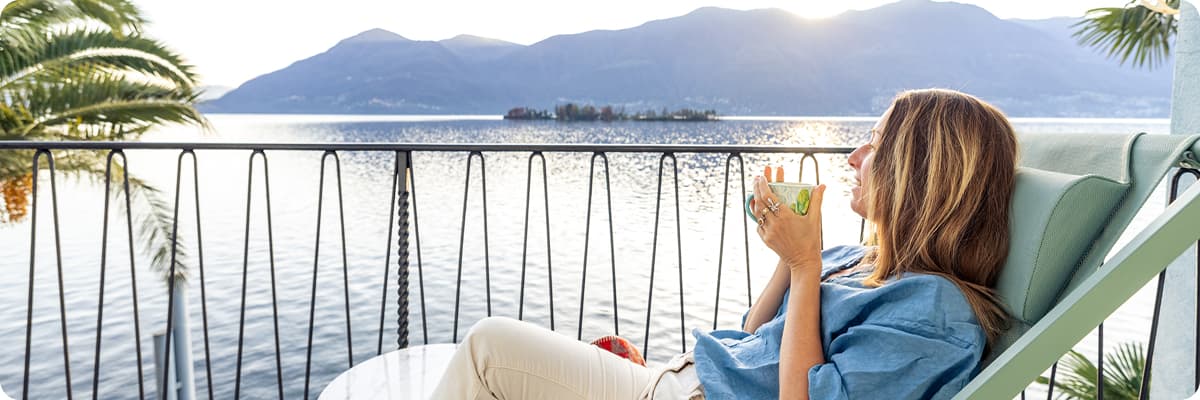
Hospitality doesn't work that way. Your hooks are sensory, aspirational and emotional.
Imagine waking up to this view. The sound of waves before breakfast. That first bite of handmade pasta on a terrace overlooking the sea.
You're not solving a problem. You're planting a desire. You're inviting someone into a feeling — and that feeling needs to build over weeks or months before it becomes a booking. The creative skills, the storytelling instincts, the visual language required are fundamentally different from what generic social media courses teach.
3. The sales cycle is
long and emotional.
Most social media strategy is built around short purchase cycles. See it, want it, click it, buy it. That works for a £40 impulse purchase. It does not work for a £2,000 family holiday or a £150 anniversary dinner.
Your guests take weeks — sometimes months — to move from discovery to booking. Their decision is shaped by emotion, trust and imagination, built up across dozens of touchpoints. They'll save your post, show it to their partner, revisit your profile three times, read reviews, compare options — and then book.
Generic social media advice optimises for the click. Your business needs a strategy that nurtures intent over time.
That's a completely different discipline.
4. Your guests are your best content creators.
In most industries, user-generated content is a nice bonus. In hospitality, it's your most powerful asset.
A guest's photo of their room, their story about a birthday surprise at your restaurant, their reel from the rooftop bar — these are more persuasive than anything your marketing team will ever produce. Potential guests trust other guests more than they trust your brand.
But harnessing UGC in hospitality requires a specific strategy: encouraging it without making it feel forced, curating it without losing authenticity, responding to it in ways that build community. Generic social media training barely scratches the surface of this. In hospitality, it should be central to everything you do.

5. You're competing with your own distributors.
This is the one that no other industry truly understands.
Booking.com, Expedia, Google, TripAdvisor — these platforms are simultaneously your sales channels and your competitors for the same guest's attention. They spend millions on social media, SEO and paid media targeting the exact audiences you're trying to reach. And when a guest books through them instead of directly, your margin shrinks significantly.
Your social media strategy isn't just about building your brand. It's about driving direct demand — reducing dependency on platforms that take a substantial cut of every booking. That's a strategic challenge that generic social media frameworks don't even acknowledge, let alone solve.
6. Location is the product.
You can photograph a handbag on a white background and sell it to anyone, anywhere. Your product doesn't work that way.
In hospitality, the place is the experience. Your content needs to sell a destination, an atmosphere, a moment in time — not features and benefits. The light at golden hour on your terrace. The energy of your lobby bar on a Friday evening. The quiet of your spa at dawn.
This requires a completely different approach to visual storytelling — one that captures mood, place and feeling rather than product specifications. It's one of hospitality's greatest strengths on social media, but only if your team knows how to use it strategically rather than just posting pretty pictures.
7. Reputation is real-time and public.
A bad review of a product brand disappears into a sea of Amazon ratings. A bad review of your hotel or restaurant lives on Google, TripAdvisor and social media — visible to every potential guest, influencing every future booking decision.
In hospitality, reputation management isn't a separate function from social media. It's embedded in every post, every comment, every DM response, every story reply. One poorly handled complaint on Instagram can cost thousands in lost bookings. One brilliant response can turn a critic into an advocate.
This real-time, public-facing pressure is unique to hospitality and requires social media skills that generic training simply doesn't cover — from crisis communication to review response strategy to building the kind of online presence that makes negative moments the exception, not the story.
8. Your revenue model changes everything.
Here's what generic social media training never addresses: how your business actually makes money
In hospitality, your revenue metrics — occupancy, ADR, RevPAR, covers, average spend, direct booking share — don't map to the KPIs that generic frameworks measure. Your seasonality means content strategy, ad spend and team capacity fluctuate dramatically across the year. Your margin structure means every marketing pound needs to justify itself differently than it would in a high-margin product business.
If your social media strategy isn't built around your revenue model, it will always feel disconnected from the metrics your leadership cares about. And a social media strategy that leadership can't connect to commercial outcomes is a strategy that gets its budget cut.
9. Your teams are lean. Your approval chains are not.
In a DTC brand, the social media manager often has full creative control. They can concept, create, publish and optimise in the same afternoon.
In hospitality, teams are lean — often one or two people managing social across an entire property or portfolio. Yet the approval process runs through marketing directors, general managers, brand standards teams, and sometimes owners or asset managers. The trend you spotted on Monday is irrelevant by the time it's approved on Thursday.
Generic advice tells you to “move fast” and “be reactive”. Your team needs a content operating system designed for how hospitality organisations actually work — one that builds speed into your approval structure rather than pretending it doesn't exist.
10. Multi-property, multi-brand, multi-audience.
If you manage social media across more than one property — or across a brand with multiple locations — you're dealing with a layer of complexity that most social media education doesn't even acknowledge.
How do you maintain brand consistency while allowing individual properties to feel authentic? How do you allocate budget across locations with different markets, different competitive sets, and different seasonal patterns? How do you create content that works for a city-centre business hotel and a rural wellness retreat under the same brand umbrella?
These aren't edge cases. For most hospitality social media professionals, this is the daily reality. And yet, the advice they're given assumes a single brand, a single audience, and a single content calendar.
Hospitality social media vs. generic social media:
the core differences
These are different rules. They need
a different approach.
Hospitality social media isn't a variation of generic social media. It's a different discipline — with its own revenue dynamics, guest psychology, creative language, operational constraints and competitive landscape.
The brands that recognise this first — and invest in learning the actual rules — will have an extraordinary advantage. Because the raw material is already there: travel, food, design, wellness, culture, human connection. Hospitality produces some of the most compelling content on the internet. What's been missing is the strategy to match.
The Hospitality Social Media Summit takes place September 3–4, 2026 in London
Places are limited to ensure every attendee receives personalised strategy attention.
Stay up-to-date
with Hospitality Social Media Summit
Get updates on city announcements, agenda drops, speaker reveals, and ticket releases.